
农业大数据学报 ›› 2025, Vol. 7 ›› Issue (4): 506-518.doi: 10.19788/j.issn.2096-6369.000117
李长健( ), 商守闯*()
收稿日期:2025-05-23
修回日期:2025-07-02
出版日期:2025-12-26
发布日期:2025-12-26
通讯作者:
商守闯,E-mail:2858017996@qq.com。作者简介:李长健,E-mail: Changjian@hust.edu.cn。
基金资助:
LI ChangJian(), SHANG ShouChuang*()
Received:2025-05-23
Revised:2025-07-02
Published:2025-12-26
Online:2025-12-26
摘要:
农村土地数据的数据化特征及其公共属性,决定了农村土地数据的开发利用区别于一般数据,并引发了对其开发利用主体、权利保护以及开发利用制度的重新审视。在我国农村土地场域中,农村土地数据的权利归属模糊不清、开发主体资格界定不明、价值导向不明与程序规范缺失等问题逐渐凸显。以上述现实困境为切入点,从制度和施行维度为农村土地数据要素的合法、有序开发利用提供理论和实践基础,通过剖析其背后的法律规制缺失、利益主体失衡、社会认知偏差与程序机制缺失等成因,构建农村土地数据法治体系尤为必要。据此提出要针对不同类型数据采用差异化的归属方案;明确开发主体的准入标准与退出机制;构建基于目的特定原则、比例原则以及最小限制与最大促进原则的数据使用机制,规范各类开发利用主体的利益行为;提出农村土地数据开发利用全过程程序性规范框架,旨在更好地保障各权利主体的权益,助力农业强国建设的长远目标。
李长健, 商守闯. 农村土地数据开发利用困境与法治进路探析[J]. 农业大数据学报, 2025, 7(4): 506-518.
LI ChangJian, SHANG ShouChuang. An Analysis of the Dilemmas in the Development and Utilization of Rural Land Data and the Rule of Law Paths[J]. Journal of Agricultural Big Data, 2025, 7(4): 506-518.
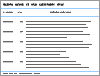
表1
农村土地数据类型"
| 农村土地类型 | 农村土地数据类型 | 具体内容 |
|---|---|---|
| 农用地 | 农用地数据 | 空间位置、土地(水域)面积、土壤类型、作物种植、地形地貌、土地肥力、水源状况、水质数据、土地所有权数据、土地承包经营数据、土地流转数据等 |
| 建设用地 | 建设用地数据 | 空间位置、土地面积、开发状态、土地使用权数据、建筑物归属数据等 |
| 未利用地 | 未利用地数据 | 由于未利用地并非本文研究对象,故不做分类 |
| [1] | 平卫英, 章标彪, 王佳, 等. 农户规模经营的增收效应:内在机制和实证检验. 管理学刊, 2025, 38(1):63-81. |
|
PING W Y, ZHANG B B, WANG J, et al. Income effects of large-scale household operations: intrinsic mechanisms and empirical tests. Journal of Management, 2025, 38(1):63-81.
doi: 10.38104/vadyba |
|
| [2] | 沈费伟. 小农户与新型农业经营主体如何有机衔接——基于共生理论的阐释. 山西农业大学学报(社会科学版), 2022(1):10-18. |
| SHEN F W. How to integrate small farmers and new agricultural business entities organically: An interpretation based on symbiosis theory. Journal of Shanxi Agricultural University (Social Science Edition), 2022(1):10-18. | |
| [3] | 《中共中央办公厅国务院办公厅印发<数字乡村发展战略纲要>》.https://www.gov.cn/zhengce/2019-05/16/content_5392269.htm [2025-04-11]. |
| GENERAL OFFICE of the CPC Central Committee & GENERAL OFFICE of the State Council. Strategic Plan for Digital Rural Development.https://www.gov.cn/zhengce/2019-05/16/content_5392269.htm (accessed Apr. 11, 2025). | |
| [4] | 《农业农村部关于大力发展智慧农业的指导意见》.https://www.gov.cn/zhengce/zhengceku/202410/content_6983051.htm [2025-04-11]. |
| MINISTRY of Agriculture and Rural Affairs, Guiding Opinions on Vigorously Developing Smart Agriculture,https://www.gov.cn/zhengce/zhengceku/202410/content_6983051.htm (accessed Apr. 11, 2025). | |
| [5] | 《农业农村部关于印发<全国智慧农业行动计划(2024—2028年)>的通知》.https://www.gov.cn/zhengce/zhengceku/202410/content_6983057.htm [2025-04-11]. |
| MINISTRY of Agriculture and Rural Affairs, Notice on Issuing the National Action Plan for Smart Agriculture (2024-2028),https://www.gov.cn/zhengce/zhengceku/202410/content_6983057.htm (accessed Apr. 11, 2025). | |
| [6] | 《中共中央 国务院印发<加快建设农业强国规划(2024-2035年)>》.https://www.gov.cn/zhengce/202504/content_7017469.htm [2025- 04-11]. |
| CPC Central Committee & State Council, Plan for Accelerating the Construction of an Agricultural Powerhouse (2024-2035).https://www.gov.cn/zhengce/202504/content_7017469.htm (accessed Apr. 11, 2025). | |
| [7] |
李长健, 姜瑜. 农村土地数据权利实践的参与主体、具体类型及利益保护. 农业大数据学报, 2023, 5(4):56-65.
doi: 10.19788/j.issn.2096-6369.230406 |
| LI C J, JIANG Y. Participants, specific types and interest protection in the practice of rural land data rights. Journal of Agricultural Big Data, 2023, 5(4):56-65. | |
| [8] | 马柱. 农村土地调查基础数据采集与处理. 当代农机, 2024(6):93-94. |
| MA Z. Collection and processing of basic data for rural land surveys. Contemporary Agricultural Machinery, 2024(6):93-94. | |
| [9] | 戴建旺, 徐建新, 何禾. 县(市)级土地利用数据库建设技术方法及成果应用. 中国土地科学, 2002(3):46-48. |
| DAI J W, XU J X, HE H. Technical methods and application results of county-level land use database construction. China Land Science, 2002(3):46-48. | |
| [10] | 汤珂, 熊巧琴, 李金璞, 等. 数据经济学(第二版). 北京: 清华大学出版社, 2024:p3. |
| TANG K, XIONG Q Q, LI J P. et al. Data Economics (2nd Ed). Beijing: Tsinghua University Press, 2024:p3. | |
| [11] | 《农业农村部办公厅关于印发<农村土地承包数据管理办法(试行)>的通知》.http://www.zcggs.moa.gov.cn/tzgg/202005/t20200525_6345119.htm [2025-04-11]. |
| MINISTRY of Agriculture and Rural Affairs, Notice on Issuing the Rural Land Contract Data Management Measures,http://www.zcggs.moa.gov.cn/tzgg/202005/t20200525_6345119.htm (accessed Apr. 11, 2025). | |
| [12] | 中华人民共和国自然资源部. 《土地分类》. https://www.mnr.gov.cn/zt/hd/dqr/42earthday/rsdq/wszt/201807/t20180709_2056249.html [2025-04-11]. |
| MINISTRY of Natural Resources. Land Classification, https://www.mnr.gov.cn/zt/hd/dqr/42earthday/rsdq/wszt/201807/t20180709_2056249.html (accessed Apr. 11, 2025). | |
| [13] | 张先贵. 中国语境下土地开发权内容之法理澄清——兼论土地资源上权利群与权力群配置基点的转型. 法律科学(西北政法大学学报), 2020 38(5):73-87. |
| ZHANG X G. Jurisprudential clarification of the content of land development rights in the Chinese context: Also on the transformation of the allocation basis of rights group and powers group on land resources. Science of Law (Journal of Northwest University of Political Science and Law), 2020 38(5):73-87. | |
| [14] | 段永彪, 赵宇洋, 董新宇. 数字经济如何赋能新质生产力——基于省级面板数据的实证研究. 经济问题探索, 2025(3):1-15. |
| DUAN Y B, ZHAO Y Y, DONG X Y. How digital economy empowers new quality productivity: An empirical study based on provincial panel data. Exploration of Economic Issues, 2025(3):1-15. | |
| [15] | 郑德洛, 蒋永甫. “和谐共振”还是“各行其道”?——农地产权制度变革与农村基层民主发展的关系. 社会科学论坛, 2024(4):58-71. |
| ZHENG D L, JIANG Y F. Harmony resonance or separate paths? relationship between farmland property rights reform and rural grassroots democracy development. Social Science Forum, 2024(4): 58-71. | |
| [16] | 姜南, 马艺闻. 基于不完全契约视角的全国一体化数据市场建设路径研究. 江西财经大学学报, 2025(2):25-35. |
| JIANG N, MA Y W. Research on the construction path of national integrated data market from the perspective of incomplete contracts. Journal of Jiangxi University of Finance and Economics, 2025(2): 25-35. | |
| [17] | 焦勇, 齐梅霞. 数字经济赋能新质生产力发展. 经济与管理评论, 2024, 40(3):17-30. |
| JIAO Y, QI M X. The role of digital economy in promoting the development of new quality productivity. Economic and Management Review, 2024, 40(3):17-30. | |
| [18] | 马翠萍. 农村集体经营性建设用地入市收益分配的实践探索与制度优化. 改革, 2022(10):106-116. |
| MA C P. Practical exploration and institutional optimization of income distribution from the market entry of rural collective operating construction land. Reform, 2022 (10): 106-116. | |
| [19] | 曾博. 基于组织形态发展的工商资本下乡合作模式研究——兼论农户主体权益保障. 学习与探索, 2018(3):133-137. |
| ZENG B. Study on the cooperation model of industrial and commercial capital entering the countryside based on organizational form development: Also on the protection of farmers’ subject rights and interests. Learning and Exploration, 2018(3):133-137. | |
| [20] | 王海川. 重视国土资源大数据安全. 国土资源报. 2015-04-1717. |
| WANG H C. Emphasizing the security of big data in land and resources. Land and Resources Daily, Apr, 17, 2022. | |
| [21] | 王怡. 土地国家所有法权秩序的内在逻辑与实现机理. 法商研究, 2022, 39(5):146-159. |
| WANG Y. The Internal logic and realization mechanism of the legal order of state ownership of land. Jurisprudence, 2022, 39(5):146-159. | |
| [22] | 高富平. 数据生产理论——数据资源权利配置的基础理论. 交大法学, 2019(4):5-19. |
| Gao F P. Theory of data production: A basic theory of rights allocation of data resources. Jiaotong University Law Journal,. 2019(4):5-19. | |
| [23] | 苏岚岚, 彭艳玲, 周红利. 共同富裕背景下农户数字经济参与的收入效应及作用机制. 中国农村经济, 2024(8):145-165. |
| SU L L, PENG Y L, ZHOU H L. Income effect and mechanism of farmers’ participation in the digital economy under the background of common prosperity. China Rural Economy, 2024(8):145-165. | |
| [24] | 田野. 大数据时代知情同意原则的困境与出路——以生物资料库的个人信息保护为例. 法制与社会发展, 2018, 24(6):111-136. |
| TIAN Y. The Dilemma and way out of the principle of informed consent in the era of big data: taking personal information protection of biobanks as an example. Law and Social Development, 2018, 24(6): 111-136. | |
| [25] | 崔聪聪. 数据泄露通知制度研究. 西南民族大学学报(人文社科版), 2019, 40(10):79-84. |
| CUI C C. Research on data breach notification system. Journal of Southwest Minzu University (Humanities and Social Sciences Edition), 2019, 40(10):79-84. | |
| [26] | 王良顺, 李想. 生成式人工智能服务提供者的数据安全保护义务研究. 南昌大学学报(人文社会科学版), 2023, 54(6):72-83. |
| WANG L S, LI X. Research on data security protection obligations of generative AI service providers. Journal of Nanchang University (Humanities and Social Sciences Edition), 2023, 54(6):72-83. | |
| [27] | 李光勤, 李梦娇, 张廷海. 政府数据开放、营商环境与FDI流入. 上海财经大学学报, 2024, 26(6):49-61. |
| LI G Q, LI M J, ZHANG T H. Government data openness, business environment and FDI inflow. Journal of Shanghai University of Finance and Economics, 2024, 26(6):49-61. | |
| [28] | 刘金红, 段庆林, 董明辉. 我国农村社会保障制度研究. 中国软科学, 2001(1):35-38. |
| LIU J H, DUAN Q L, DONG M H. Research on China’s rural social security system. China Soft Science, 2001(1):35-38. | |
| [29] | 李博. 大数据时代公共管理变革的特征和挑战探析. 领导科学, 2021(16):9-13. |
| LI B. Characteristics and challenges of public management reform in the era of big data. Leadership Science, 2021(16):9-13. | |
| [30] | 郑雄飞, 刘婕. “城乡两栖”视角下农村宅基地“三权分置”问题研究. 华东师范大学学报(哲学社会科学版), 2024, 56(2):110-119+180-181. |
| ZHENG X F, LIU J. Research on the issue of “Three Rights Separation” in rural homestead from the perspective of “Urban-Rural Amphibious”. Journal of East China Normal University (Philosophy and Social Sciences Edition), 2024, 56(2):110-119+180-181. | |
| [31] | 戚渊. 立法权概论. 政法论坛, 2000(6):8-18. |
| QI Y. Introduction to legislative power. Political and Legal Forum, 2000(6):8-18. | |
| [32] | 陈泳昌, 林迎蕾. 数据要素开发与经济增长新动能——基于国家级大数据综合试验区设立的经验证据. 湖南大学学报(社会科学版), 2025, 39(2):68-78. |
| CHEN Y C, LIN Y L. Development of data elements and new momentum of economic growth: Empirical evidence based on National Big Data Comprehensive Pilot Zones. Journal of Hunan University (Social Sciences), 2025, 39(2):68-78. | |
| [33] | 胡良霖, 王丽娜, 王瑞丹, 等. 数据要素价值演进路径研究. 数据与计算发展前沿(中英文), 2024, 6(5):36-45. |
| HU L L, WANG L N, WANG R D, et al. Research on the evolution path of data element value. Frontiers of Data and Computing (Chinese and English), 2024, 6(5):36-45. | |
| [34] | 岳文泽. 土地大数据发展与土地管理转型[EB].[2025-04- 11]. https://www.chinalandscience.com.cn/uploadfile/zgtdkx/20160711/. |
| YUE W Z. Development of Land Big Data and Transformation of Land Management. https://www.chinalandscience.com.cn/uploadfile/zgtdkx/20160711/. | |
| [35] | 胡继晔. 数据生产要素的反垄断困境及破解对策. 人民论坛, 2021(19):88-91. |
| HU J Y. Anti-monopoly dilemmas and countermeasures of data production factors. People’s Forum, 2021(19):88-91. | |
| [36] | 武腾. 人工智能时代个人数据保护的困境与出路. 现代法学, 2024, 46(4):116-130. |
| WU T. Dilemmas and solutions for personal data protection in the era of artificial intelligence. Modern Jurisprudence, 2024, 46(4):116-130. | |
| [37] | 黄学贤. 行政法中的比例原则研究. 法律科学-西北政法学院学报, 2001(1):72-78. |
| HUANG X X. Research on the proportionality principle in administrative law. Legal Science: Journal of Northwest University of Political Science and Law, 2001(1):72-78. | |
| [38] | 李长健. 论农民权益的经济法保护——以利益与利益机制为视角. 中国法学, 2005(3):120-134. |
| LI C J. On the economic law protection of farmers' rights and interests: From the perspective of interests and interest mechanisms. China Legal Science, 2005(3):120-134. | |
| [39] | 《中共中央国务院关于构建数据基础制度更好发挥数据要素作用的意见》. https://www.gov.cn/zhengce/2022-12/19/content_5732695.htm. [2025-06-29]. |
| CPC Central Committee & State Council, Opinions on Building a Basic Data System to Better Leverage the Role of Data Elements.https://www.gov.cn/zhengce/2022-12/19/content_5732695.htm. | |
| [40] | 姜瑜. 有条件开放类公共数据合理使用的法律规则优化. 陕西理工大学学报(社会科学版), 2025, 43(1):41-49. |
| JIANG Y. Optimization of legal rules for reasonable use of conditionally open public data. Journal of Shaanxi University of Technology (Social Science Edition), 2025, 43(1):41-49. | |
| [41] | 王俊豪. 中国特色政府监管理论体系:需求分析、构建导向与整体框架. 管理世界, 2021, 37(2):148-164+184+11. |
| Wang J H. Theoretical system of government regulation with chinese characteristics: Demand analysis, construction orientation and overall framework. Management World, 2021, 37(2):148-164+184+11. | |
| [42] | 王洛忠, 米柄旭. “制度—组织”视角下政策执行偏差及成因研究——以H省S市行政审批改革为例. 北京航空航天大学学报(社会科学版), 2024, 37(6):93-103. |
| WANG L Z, MI B X. Research on Policy Implementation deviation and its causes from the perspective of “Institution-Organization”: A case study of administrative approval reform in S City, H Province. Journal of Beihang University (Social Sciences Edition), 2024, 37(6):93-103. |
| [1] | 李长健, 姜瑜. 农村土地数据权利实践的参与主体、具体类型及利益保护[J]. 农业大数据学报, 2023, 5(4): 56-65. |
|
||
